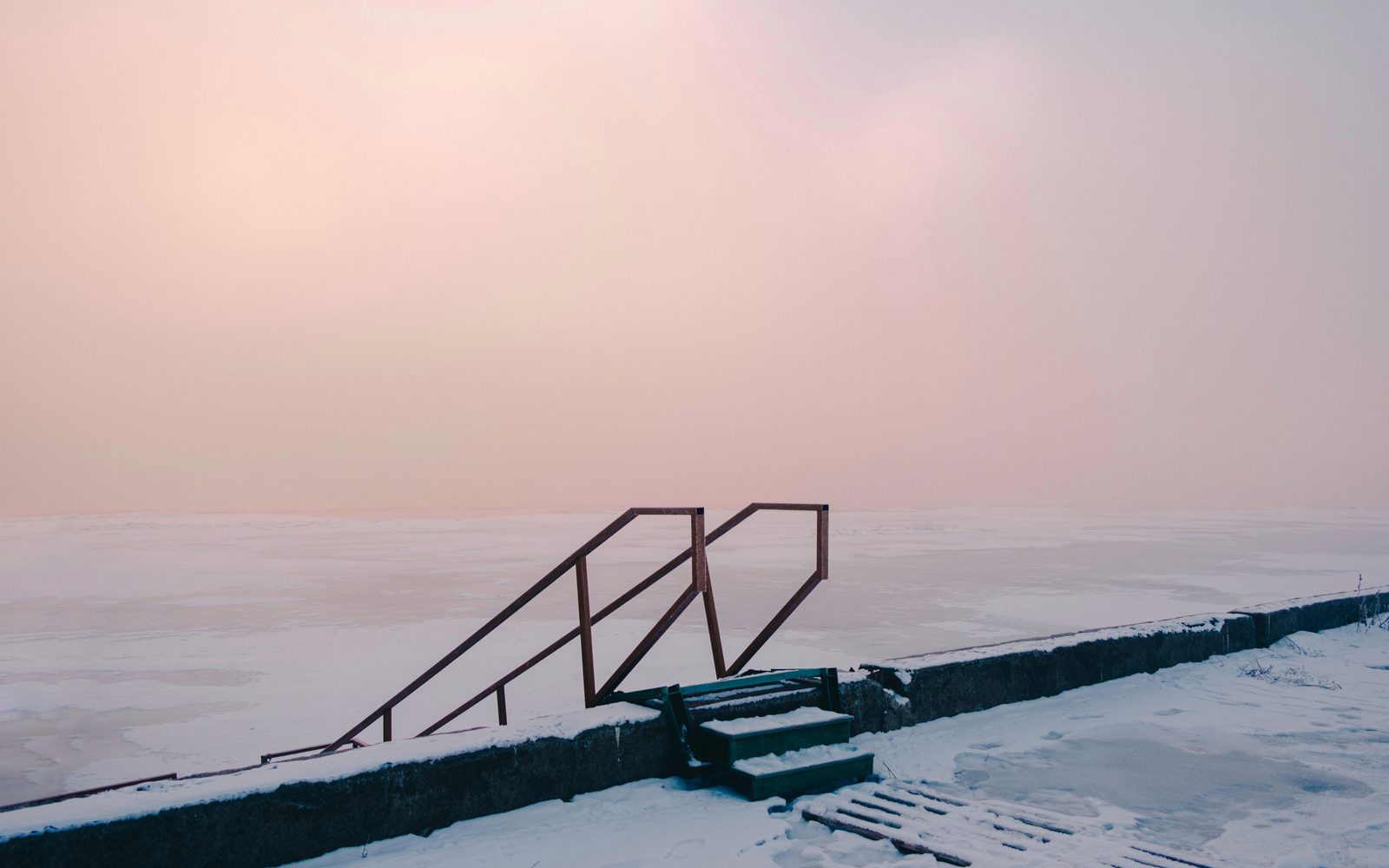
A town of 9,000 already had a winter bathing habit. Almstad Swim Hall gives it a building, sized for a five-month coastal winter.
A pool built for the cold, not against it
Almstad Swim Hall opened its first winter bathing season this month, serving a town of 9,000 people on the Ostrobothnian coast. Winter bathing has run informally here for decades, mostly through holes cut in the harbour ice and a rotation of home saunas. The hall gives that same practice a building, without pretending the cold is a problem to be solved.
The main pool sits partly outdoor, partly under a retractable roof, so swimmers can move between heated water at 28 degrees and open winter air without a change of room. Water temperature and air temperature sit close enough together at the transition point that the shock most winter bathers chase happens on entry to the plunge basin, not on the walk between rooms.
Sizing a public building for 9,000 people
A town of 9,000 cannot support a swim hall sized like a city facility, and it does not need one. Almstad seats roughly 180 people at capacity across the pool deck and the two sauna rooms, a number set by attendance data from the existing outdoor sauna club rather than by a standard leisure-centre formula. Peak demand on a cold, clear evening runs close to that number; peak demand on a wet one runs closer to 40.
That difference drove the plan more than any single architectural idea. The building splits into a heated core (changing rooms, the two saunas, a small cafe) that runs at full comfort year-round, and an outer pool deck that is built to be used cold, wet, and occasionally under snow. Roughly 60 percent of the building's floor area is unheated or only frost-protected, which kept both the construction cost and the running cost down for a town this size.
Winter bathing as the design brief
The client brief did not ask for a swimming pool with a sauna attached. It asked for a building that made a habit the town already had easier to keep doing through a coastal winter that runs close to five months. We treated the ice-hole tradition as the actual program: a fast route from warm to cold and back, repeatable multiple times in one visit, with no changing-room bottleneck between rounds.
The plunge basin sits directly off the main sauna room, five steps down, so a bather can move between roughly 80 degrees and just above freezing in under ten seconds. That transit time was tested and timed against the existing informal setup at the harbour before the room was drawn.
The first season
Almstad opened its winter season with roughly 40 members from the outdoor sauna club transferring in on day one, plus general admission. The building is designed to run through to April, when the outdoor deck reopens for regular summer swimming without the plunge basin's cold circuit.
What stayed simple on purpose
The finish palette inside Almstad is deliberately narrow: unsealed spruce boarding on the sauna walls, poured concrete on the pool deck, and a single run of glazing along the harbour-facing side of the heated core. None of it needed to be more than that. A winter bathing habit does not ask for a lobby or a reception desk beyond a card reader at the door; the building spends its budget on the plunge basin's transit time and the roof's ability to retract in temperatures down to minus 15, not on finishes nobody notices while moving between hot and cold at speed.
FAQ
How many people does Almstad Swim Hall serve?
It is sized for a town of 9,000, with peak capacity around 180 people across the pool deck and sauna rooms.
What is the plunge basin temperature?
It sits just above freezing, against a sauna room that runs close to 80 degrees, five steps away.
How long does the winter bathing season run?
Roughly five months, opening this month and running through to April.